


Beethoven & Dinosaur’s Mixtape Wins Game of the Year at the AGDAs
Uppercut Games awarded Studio of the Year
7 October 2026 – Melbourne based game development studio Beethoven & Dinosaur has won Game of the Year for its narrative-driven adventure game Mixtape at the 2026 Australian Game Developer Awards (AGDAs). Presented by the Interactive Games and Entertainment Association (IGEA), the AGDAs celebrate the best and brightest of Australia’s video game development industry.
“Mixtape was the outcome of an amazingly talented team,” said Beethoven & Dinosaur director, Johnny Galvatron. “To go from wanting to make a game around DEVO to creating something that resonates with so many people is mind blowing. We’re lucky to be part of such a talented community, and I’m so proud of Mixtape and my team.”
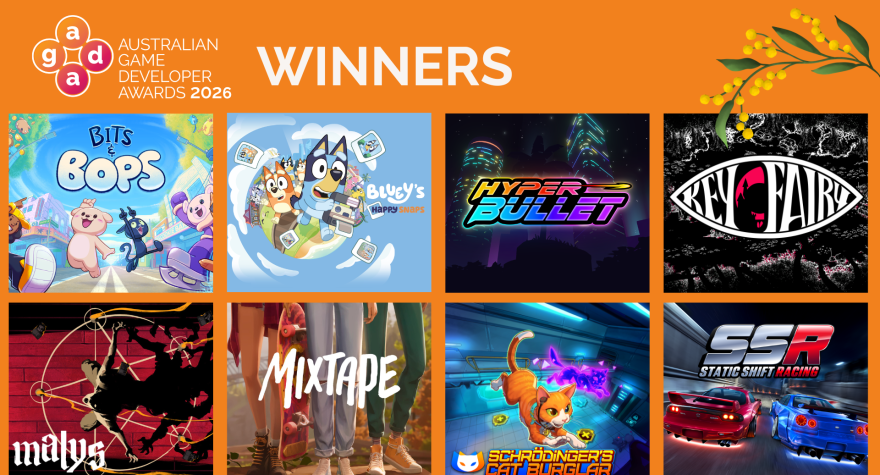
Mixtape is a coming-of-age story told through striking stop-motion 3D visuals, with an iconic soundtrack featuring artists such as The Cure, Joy Division, and DEVO. AGDA’s judges praised the game for its heartfelt narrative and polished gameplay, stating, “Mixtape is a triumph in virtual storytelling, pairing a distinct visual identity with heartfelt music to deliver one of the most memorable experiences in recent memory.” Mixtape also won Excellence in Visual Art and Excellence in Sound Design.
Other winners from this year’s AGDAs include rhythm game Bits & Bops (Tempo Lab Games) for Excellence in Gameplay, and Excellence in Accessibility; physics-based puzzle platformer Schrodinger’s Cat Burglar (Abandoned Sheep with SuperTonic, Actuator Digital & Translationz) which took home the award for Excellence in Narrative; hand-drawn, action-adventure debut Key Fairy (Owl Machine) won Excellence in Debut. Everyone’s favourite dog was also recognised at this year’s awards with Bluey’s Happy Snaps (Gameloft Brisbane) winning the Excellence in Impact category.
The AGDAs also recognise studios and individuals who have greatly contributed to the growth of the Australian video game industry. The Studio of the Year was awarded to Uppercut Games, the Canberra-based team behind the Submerged series and the highly anticipated Magicians: The Devil’s Deal, slated for release in 2027. Uppercut is celebrated for fostering a diverse team and company culture that emphasises collaboration and respect, and for the consistent contribution and support the team makes to uplifting the Australian games industry.
The inaugural Games Connect Asia Pacific (GCAP) Legacy Award has been awarded to Riot Games principal software engineer and industry veteran, Tony Albrecht. Tony’s commitment and advocacy for the ANZ video game community span decades, including twenty years of GCAP public speaking engagements and industry panels to foster the next generation of game developers. Additionally, as a founding member of ARGGGH, now known as Adelaide Game Developers, Tony has helped build and sustain South Australia’s local game development community.
Amy Potter-Jarman, games marketing expert at Synty Studios, and Tyson Butler-Boschma, Associate Lead Cinematic & Lighting Artist at Gameloft, were awarded the 2026 Rising Star Award for their commitment and dedication to the ANZ developer space. As the visionary behind Frosty Games Fest, Amy has built global relationships with prominent industry events such as the Summer Games Fest to help platform up-and-coming ANZ game devs. Tyson has played a key role in fostering knowledge sharing and community growth with the ANZ games community, contributing to many programs and events both within industry and across the broader screen sectors, including mentorship and authoring a book aimed at closing the knowledge gap between early career and experienced developers.
This year’s Adam Lancman Award was awarded to Secret Lab and Yarn Spinner Creative Director Paris Buttfield-Addison. Paris’s work within ANZ spans many facets, including co-founding the BAFTA and IGF winning studio Secret Lab, championing local development as President of Tasmanian Game Makers (TasGM), helping educate the next generation of Australian game-makers and working with policy makers, media and agencies to highlight the local industry and the opportunities available.
“This year’s selection of winners and finalists is a great showcase of Australia’s games industry,” said Ron Curry, CEO of IGEA. “The breadth and diversity of submissions across all our categories from across all the country represents the remarkable talent we have here and the maturity of the Australian video game industry. On behalf of IGEA, I’d like to thank and congratulate the finalists, winners, and judges for their work and commitment in making the Australian video game industry what it is today.
“Behind every great Australian game and individual is a robust ecosystem that allows them to flourish. Support from state, territory and federal governments not only drives growth but enables Australian studios to take creative risks, create more jobs, and compete on the global stage. Continued government funding is crucial in ensuring Australia continues to produce great games that are exported to the rest of the world.”
Please see the full list of the AGDA 2026 winners below:
- Game of the Year: Mixtape by Beethoven & Dinosaur (VIC)
- Excellence in Art: Mixtape by Beethoven & Dinosaur (VIC)
- Excellence in Gameplay: Bits & Bops by Tempo Lab Games (NSW)
- Excellence in Narrative: Schrodinger’s Cat Burglar by Abandoned Sheep with SuperTonic, Actuator Digital & Translationz (QLD)
- Excellence in Sound Design: Mixtape by Beethoven & Dinosaur (VIC)
- Excellence in Music: Malys by Summerfall Studios with Belinda Coomes and Montaigne (VIC)
- Excellence in Accessibility: Bits & Bops by Tempo Lab Games (NSW)
- Excellence in Extended Reality: Hyper Bullet by Protostar (QLD)
- Excellence in Impact: Bluey’s Happy Snaps by Gameloft Brisbane with BBC Studios, Ludo Studio & Bandai Namco (QLD)
- Excellence in Debut: Key Fairy by Owl Machine (QLD)
- Excellence in Ongoing: Static Shift Racing by Timbo Jimbo (VIC)
- The Rising Star: Amy Potter-Jarman (NSW) and Tyson Butler-Boschma (QLD)
- The Adam Lancman: Paris Buttfield-Addison (TAS)
- The GCAP Legacy Award: Tony Albrecht (SA)
- Studio of the Year: Uppercut Games (ACT)
-END-
Please contact igea@doublejump.com.au for queries or to arrange an interview.
About the AGDAs
The Australian Game Developer Awards (AGDAs) are a national event celebrating outstanding games and individual achievements by the Australian game development community.
Since 2020, the AGDAs have been run by the Interactive Games and Entertainment Association (IGEA) – the peak industry association representing the voice of Australian and New Zealand companies in the computer and video games industry.
For more information, please visit: https://agdas.com.au
About IGEA
IGEA (Interactive Games & Entertainment Association) is the peak industry association representing the voice of Australian and New Zealand companies in the computer and video games industry. IGEA supports the games industry’s business and public policy interests through advocacy, research and education programs. For more information, please visit www.igea.net

Beyond entertainment: how games are improving lives across Australia
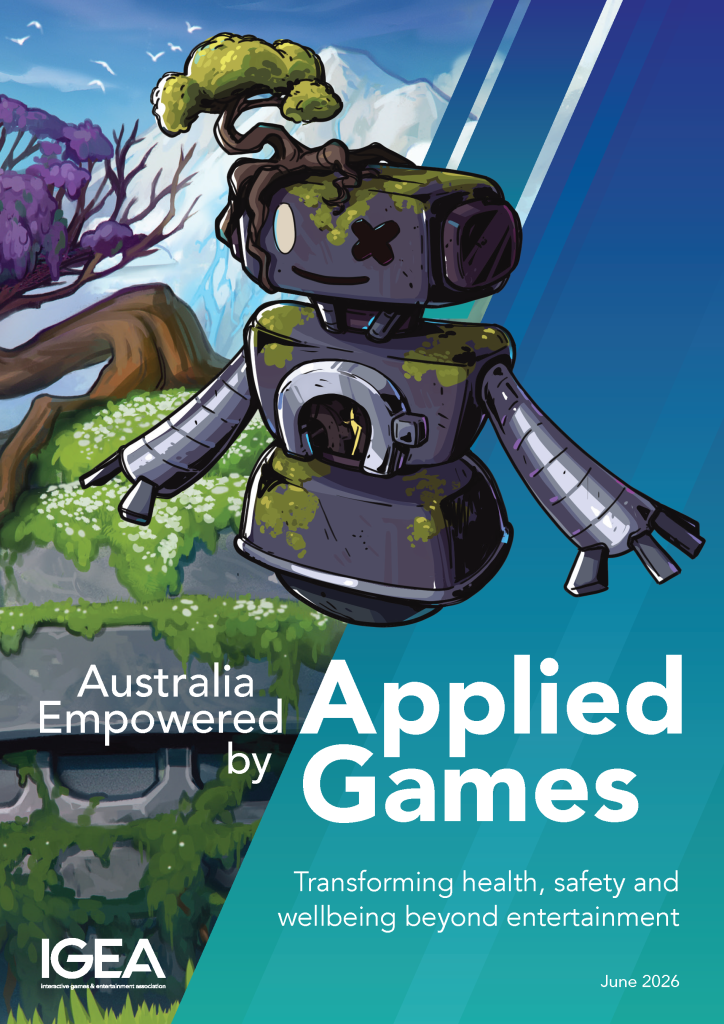
Australia Empowered by Applied Games, is IGEA’s latest publication which explores how game technologies are being used to deliver positive outcomes across health, education, safety, wellbeing and sustainability.
Australian companies are creating games experiences that:
- Support mental health and wellbeing
- Improve hearing health outcomes
- Teach online and personal safety skills
- Enhance road safety education
- Engage students in STEM learning
- Promote environmental awareness and conservation.
These examples highlight that games are not just about entertainment, they are powerful tools for learning, behaviour change and community impact.

IGEA 2026 End of Financial Year Wrap
It’s hard to believe this year has already hit July. It’s important to reflect on the year that was, and the year that is to come. At the start of the year, IGEA spent time travelling Australia, conducting roundtables and feedback sessions with our members. This has informed our work and strategic review for the first half of the year, and given us our focus for the rest of the year. We couldn’t do what we do without our members support, feedback and work on organisations like our board and working groups.
This is our letter and accountability to you – we hope you enjoy our bi annual publication highlighting our major activities and accomplishments this year.

2025 Australian Video Game Consumer Sales Results
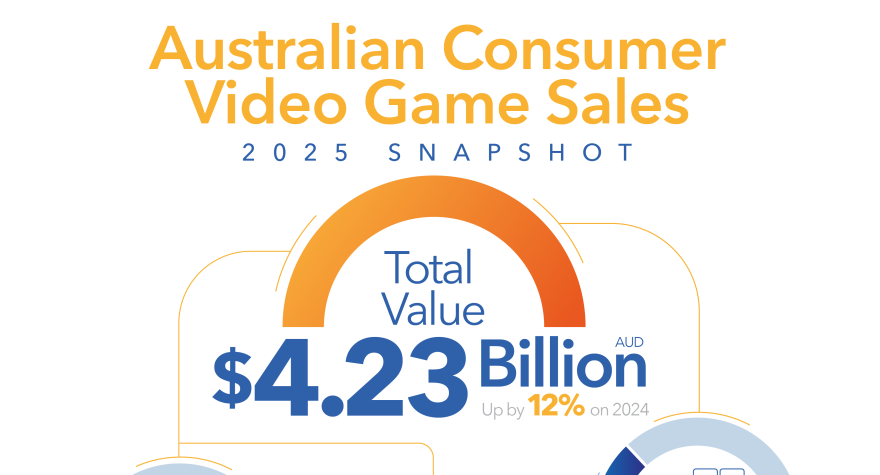
2025 consumer sales results for video games show Australians spent more than AU$4.2 billion across the category, a 12% increase over the previous year. Australians’ passion for playing video games remains robust across all formats, with growth recorded in digital, mobile and traditional retail channels.
Digital sales of video games maintained their strong performance with total sales reaching over $1.4 billion. Playing games on mobile continues to be the largest segment with sales in 2025 exceeding $1.7 billion.
Once again, Australians are sticking with traditional retailers, with physical sales totalling just under $1.1 billion. Hardware continues to perform strongly, recording a significant increase of 37% over the previous year.

According to Newzoo, which provides data for digital and mobile game sales, consumer revenue growth was driven by strong performance across the release slate, from major AAA titles through to smaller independent releases.
Looking ahead, Newzoo said that total games revenues in Australia are expected to grow at a 4.8% CAGR between 2025 and 2028, broadly tracking global growth expectations.
Game Sales Data (GSD), provide traditional retail data and stated that 2025 marked one of the strongest years on record for the Australian video games industry across all GSD tracked categories. Spending growth was driven by the launch of the Nintendo Switch 2, alongside a strong lineup of new software releases across both physical and digital storefronts across all platforms.
In an environment of challenging economic times, the power of games prevails with Australians turning to games for fun, connection and relaxation, reinforcing the industry’s important role in everyday life.
About the data we use
IGEA reports on Australian consumer video game sales using data sourced from trusted third-party providers to ensure accuracy and reliability.
- Digital and mobile sales data is drawn from the Newzoo Global Games Market Report
- Physical retail data is provided by Game Sales Data (GSD), operated by Sparkers
When comparing 2025 results to 2024 figures, it is important to note that 2024 data has been revised from originally published figures. These updates reflect improved methodologies introduced by our data partners.
Since the release of the 2024 sales report in June 2025, both Newzoo and Game Sales Data (GSD) have refined their approaches to data collection and modelling. As a result, all 2024 figures presented alongside 2025 data, including those in infographics, have been updated to ensure consistency and accuracy.
IGEA and its partners remain committed to continuously improving data quality, with revisions forming a standard part of this process.
Newzoo continues to advance its data capabilities. In February 2025, it introduced significant improvements aligning its top-down market forecasts with bottom-up performance tracking through its Game Performance Monitor.
Similarly, GSD figures remain subject to revision, reflecting updates to supplier inputs and refinements to extrapolation methodologies. These adjustments help ensure the most accurate representation of Australia’s physical games market over time.
*Game Sales Data (GSD) – Calendar year 2025.
**Newzoo Global Games Market Report May 2026. Note the dollar amounts are in AUD and converted from the USD average for 2025.
2025 New Zealand Video Game Consumer Sales Results
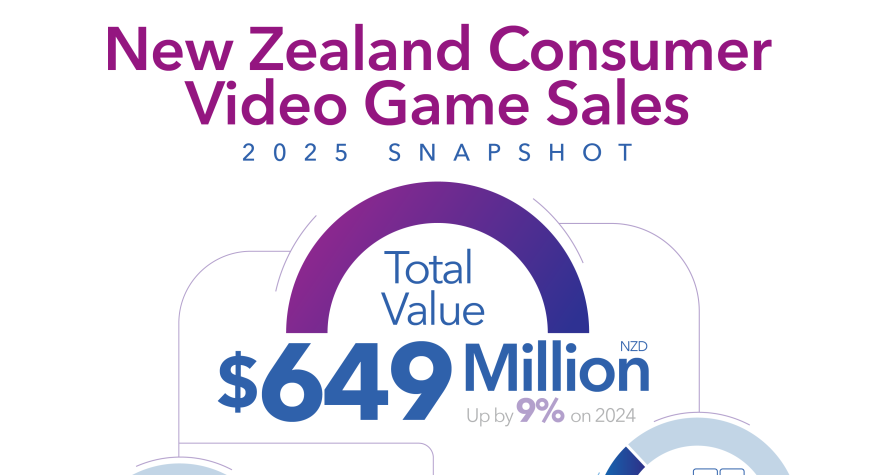
2025 consumer sales results of video games in New Zealand demonstrate strong growth, reflecting the enduring popularity of playing video games among Kiwis. Total consumer spending reached NZ$649million, an increase of 9% over the previous year.
Within the digital sales category, New Zealanders spent just over $267 million on games. Mobile continues its upward trajectory, accounting for $246.9 million.
Traditional retail sales remain an important channel and key contributor to the market with New Zealanders spending NZ$134.7 million full game software, hardware and first party peripherals. Console hardware again recorded growth compared to 2024 and is a key driver within this category.

According to Newzoo, digital games revenues in New Zealand were underpinned by a broad mix of premium titles and a wealth of mid and lower priced releases. Looking ahead, Newzoo forecast that total games revenues in the country will expand at a 5.3% CAGR between 2025 and 2028, closely mirroring global growth trends.
Game Sales Data (GSD), confirmed that the New Zealand video games traditional retail market delivered noteworthy results in 2025, driven by the successful launch of the Nintendo Switch 2 and continued consumer spending across both hardware and software on leading platforms such as the PlayStation 5.
Despite challenging economic times, sales of video games remain a popular, resilient and growing entertainment consumer category. Kiwis turn to games for fun, connection and to de-stress.
Beyond consumer sales, the broader game development industry is also thriving. Recent figures from the New Zealand Game Development Association show that local game developers generated over NZ$1 billion in revenue, highlighting the sector’s growing importance as a cornerstone of the country’s digital economy.
About the data we use
IGEA reports on New Zealand consumer video game sales using data sourced from trusted third-party providers to ensure accuracy and reliability.
- Digital and mobile sales data is drawn from the Newzoo Global Games Market Report
- Physical retail data is provided by Game Sales Data (GSD), operated by Sparkers
When comparing 2025 results to 2024 figures, it is important to note that 2024 data has been revised from originally published figures. These updates reflect improved methodologies introduced by our data partners.
Since the release of the 2024 sales report in June 2025, both Newzoo and Game Sales Data (GSD) have refined their approaches to data collection and modelling. As a result, all 2024 figures presented alongside 2025 data, including those in infographics, have been updated to ensure consistency and accuracy.
IGEA and its partners remain committed to continuously improving data quality, with revisions forming a standard part of this process.
Newzoo continues to advance its data capabilities. In February 2025, it introduced significant improvements aligning its top-down market forecasts with bottom-up performance tracking through its Game Performance Monitor.
Similarly, GSD figures remain subject to revision, reflecting updates to supplier inputs and refinements to extrapolation methodologies. These adjustments help ensure the most accurate representation of Australia’s physical games market over time.
*Game Sales Data (GSD) – Calendar year 2025.
**Newzoo Global Games Market Report May 2026. Note the dollar amounts are in NZD and converted from the USD average for 2025.

2026 New Zealand Video Games Industry Policy Platformer
The Interactive Games & Entertainment Association (IGEA) and the New Zealand Game Developers Association (NZGDA) proudly present the 2026 New Zealand Policy Platformer. In this platformer, we celebrate the New Zealand video game industry success story and most importantly, the world-class creatives behind the screens.
Video games are a cornerstone of the digital economy, and game development is a highly skilled, technical, creative and export-focused sector. Preliminary revenue figures show New Zealand game developers now generate over $1 billion dollars of revenue a year, which equates to roughly $706,000 in revenue per full-time equivalent, more than double the national productivity average.
As the general election approaches, we outline key opportunities and policy settings that will determine whether New Zealand’s game development sector reaches its full potential, and presents a unified vision for a modernised partnership between our industry and Government. Our policy asks fall under the following key themes:
- Building the next generation of talent
- Supporting game development across the education system
- Formally recognise game development as a distinct multidisciplinary industry
- Good public policy design drawing from international best practices
- Support and healthy gameplay for all Kiwis
- A modern classification scheme for video games
- Consultative and constructive approach to copyright and IP
Download the 2026 New Zealand Policy Platformer here.
The Executive Summary is also available here.
Media spokespeople available:
Joy Keene, Executive Director of NZGDA
Ron Curry, CEO of IGEA
Raelene Knowles, COO of IGEA
Please contact Policy@igea.net
About NZGDA
The New Zealand Game Developers Association (NZGDA) is the national industry body for interactive media and game development in New Zealand.
NZGDA supports and advocates for local game developers, promotes the industry globally, and works to foster a thriving, sustainable game development ecosystem in Aotearoa. For more information, please visit www.nzgda.com
About IGEA
IGEA (Interactive Games & Entertainment Association) is the peak industry association representing the voice of Australian and New Zealand companies in the video games industry. IGEA supports the games industry’s business and public policy interests through advocacy, research and education programs. For more information, please visit www.igea.net

Review of Australia’s Online Safety Unlawful Material Codes Launches
4 June 2026 | JOINT INDUSTRY ASSOCIATION MEDIA RELEASE
Australia’s peak communications, digital, and video game industry associations, responsible for developing Australia’s Online Safety Codes, have opened a public consultation on the review of the Unlawful Material Codes (Phase 1 Online Safety Codes).
These codes include obligations on digital services across the tech stack from hosting services to ISPs, search engines, app stores and social media services to take action against the most serious unlawful online content, including child sexual abuse material (CSAM), pro-terror material, and material promoting extreme violence.
From 4 June 2026, the review invites submissions from the public, civil society and industry on whether the Codes contain appropriate community safeguards and remain fit for purpose as the online environment and regulatory landscape continue to evolve.
The Unlawful Material Codes form a crucial part of Australia’s world leading online safety framework. Other jurisdictions such as the EU and the UK have introduced similar requirements, but they are less comprehensive in scope.
Australia’s system, co-developed between the industry and the regulator, meets or exceeds those comparable regimes in breadth of services covered and the range of harmful content addressed.
Australia’s framework goes further, covering six distinct categories of digital services:
- Social media services
- App distribution services
- Hosting services
- Internet carriage services (ISPs)
- Equipment providers (connected device manufacturers)
- Search engine services
When combined with the eSafety Commissioner-developed Unlawful Material Standards, which cover messaging, email, dating services, online games, websites, and generative AI services, Australia’s framework applies complementary and robust measures across virtually the entire digital ecosystem through which harmful content can be created or distributed.
“These Codes represent a globally unprecedented industry effort. Australia is setting the benchmark for what a comprehensive, co-regulatory online safety framework looks like, one that holds the entire technology stack accountable, not just the platforms that attract the most public attention.”
— Dr. Jenny Duxbury, Director of Policy, Regulatory Affairs, and Research, DIGI, on behalf of the Industry Code Steering Group
The review is examining whether the Codes remain current considering three key developments:
- Changes in the threat and technological landscape
- Including the rapid growth of generative AI tools and chatbots as potential vectors for the creation and distribution of unlawful material.
- Changes in Australia’s regulatory settings
- Including the commencement of the co-regulatory Age-Restricted Material Codes developed by these same associations, the Unlawful Material Standards, and the Government’s plans to introduce a Digital Duty of Care, and reform of the National Classification Scheme.
- Addressing confusion and drafting inconsistencies
- Resolving terminology inconsistencies and ensuring compliance measures remain clearly understood across the range of services in scope.
The industry associations invite submissions from the public, civil society organisations, and technology companies.
Submissions may address any of the discussion questions in the consultation paper, which covers topics including the proportionality of current measures, human rights considerations, technological developments, and international comparisons.
Submit via: hello@onlinesafety.org.au or www.onlinesafety.org.au
Submissions close: 9th July 2026
The codes and consultation materials are available at onlinesafety.org.au. For media inquiries, including to speak with Dr. Jenny Duxbury, contact press@digi.org.au
About the codes:
The Unlawful Material Codes were developed by a steering group comprising AMTA, ATA, CESA, DIGI, and IGEA. The Codes were registered by the eSafety Commissioner in 2023-2024 following two rounds of public consultation and more than 120 submissions.
About the industry associations:
The Australian Mobile Telecommunications Association (AMTA) (amta.org.au) is the peak body and trusted voice of the mobile telecommunications industry in Australia. Its members span telecommunications carriers, network vendors, infrastructure providers, handset manufacturers, and other smaller providers. Its mission is to promote an environmentally, socially and economically sustainable mobile telecommunications industry in Australia.
The Australian Telecommunications Alliance (ATA) is the peak body of the Australian telecommunications industry. We are the trusted voice at the intersection of industry, government, regulators, and consumers. Through collaboration and leadership, we shape initiatives that grow the Australian telecommunications industry, enhance connectivity for all Australians, and foster the highest standards of business behaviour. For more details, visit www.austelco.org.au.
The Consumer Electronics Suppliers Association (CESA) (cesa.asn.au) provides a united forum and voice for suppliers of consumer appliances to focus on regulatory, technical and commercial issues that affect the capacity of member companies to supply products in the Australian market.
The Digital Industry Group Inc. (DIGI) (digi.org.au) is a non-profit industry association for the digital industry and a key Government partner in efforts to address online harms, data and consumer protection online and to grow the digital economy, through code development, partnerships and advocacy for effective and implementable approaches to technology policy..
The Interactive Games & Entertainment Association (IGEA) (igea.net) is the industry association representing and advocating for the video games industry in Australia, including the developers, publishers and distributors of video games, as well as the makers of the most popular games platforms, consoles and devices. IGEA has over a hundred members, from emerging local game development studios to some of the largest video game companies in the world.

Australia’s video game industry shows revenue of AU$608.5 million
Video games continue to make a significant contribution to Australia’s economy
18 March 2026, Sydney – The Interactive Games & Entertainment Association (IGEA) has released its findings for the Australian game development industry, which generated revenue of AU$608.5 million in FY25. The results come from the tenth annual Australian Game Developer Survey (AGDS) Snapshot, alongside supplementary analysis from IGEA’s own research and data provided by market intelligence firm Sensor Tower which captured additional revenue from a select panel of games studios. This is the first time IGEA has incorporated supplementary data from Video Game Insights by Sensor Tower, helping paint a more comprehensive picture of the Australian video games industry. A Q&A document has been prepared to provide more details about this year’s results.
The findings highlighted a maturing local industry, with Australian studios progressing into sustained production. 30% of video game studios have been active for 10 years or more, while a further 19% have been operating for 6-9 years, demonstrating growing longevity across the sector.


Although the sector experienced some job losses, overall employment was stable with only a minor decrease in the number of full-time positions. The number of full-time positions currently sit at 2,443. Encouragingly, results from the AGDS saw many Australian studios sharing their intentions to hire in 2026, with larger studios reporting the highest number of planned recruitments. Jobs within the video games industry are spread out around Australia, with a variety of highly-qualified roles making up the sector.
With 31% of studios in 2025 developing their first game, Ron Curry, CEO of IGEA, said appropriate state and federal funding remains an important factor for supporting early-stage and mature developers, enabling sustainable studio growth, scaled production and the ability to fully compete in international markets.
“These latest numbers further highlight that the AGDS is an invaluable tool for showcasing the industry’s growth to federal, state and territory government.” said Curry. “It gives us the ability to help strengthen the case for continued support through initiatives, including tax incentives like the Digital Games Tax Offset, and direct funding. We continue to strongly encourage local studios across Australia to participate so we gather the most comprehensive and accurate data possible, ensuring we have the clearest picture for how to best support a thriving Australian game development industry.
“The Australian games industry is showing steady growth according to our industry snapshots and we have a positive outlook for the year ahead, with several of the larger studios indicating that they are planning to hire. Government support has continued to provide confidence and stability, and likely a reason to invest in our industry and community. The support the industry has and the talent it holds is reflected in the outstanding and groundbreaking games that Australian studios are taking to market,” concluded Curry.
Download the infographic here.
IGEA have developed a short Q&A document which further explains some of the 2025 Australian video game industry revenue results. You can view the Q&A here.
-Ends-
Media spokespeople available:
Ron Curry, CEO of IGEA
Raelene Knowles, COO of IGEA
Please contact igea@doublejump.com.au
About IGEA
IGEA (Interactive Games & Entertainment Association) is the peak industry association representing the voice of Australian and New Zealand companies in the video games industry. IGEA supports the games industry’s business and public policy interests through advocacy, research and education programs. For more information, please visit www.igea.net
About Australian Game Developer Survey
Our FY2025 game development survey is based on financial year data from 1 July 2024 – 30 June 2025. The survey was conducted by Bond University which supplies responses in aggregate to IGEA. The survey opened in October 2025 and closed in the middle of January 2026. Participation in the survey is voluntary. Over 600 studios were invited to participate and contacted numerous times, with 141 studios completing the survey and providing usable data. 11% more studios participated in the survey than the previous year.
Additionally, IGEA has partnered with Video Game Insights by Sensor Tower to provide a more accurate picture of revenue generated by Australian games studios. For our FY2025 report, PC and console game sales generated from a small selection of Australian studios was included in the revenue reported.
More information can be found about this year’s study by visiting the FAQ page.

Gaming, screens and safety. What parents really need to know
As first published on Bounty Parents.
Level up your family’s online safety this Safer Internet Day.
By Ron Curry, CEO of IGEA
It can sometimes feel like the calendar is overflowing with awareness days, a national day for this, an international day for that. But at their best, these moments act as helpful nudges: to check our smoke alarms, book a health appointment, or reach out to someone we haven’t spoken to in a while.
February 10, 2026 is Safer Internet Day, one of those useful days that can act as a reminder for the digital world we live in. It’s a chance to pause and do a quick digital check-up: update passwords, review privacy settings, and make sure our individual and family online safety settings are still doing what we need them to do.
With 82 per cent of Australians playing video games and nearly three-quarters of households owning two or more gaming devices, online safety is an important consideration for all players. Technology, safety tools and gameplay experiences continue to evolve rapidly, and 2026 is already seeing major advancements. That means online safety is never a “one and done” task, it’s something we revisit as our games, devices and families change.
For more than 25 years, the Australian video games industry has been committed to creating safe, positive online spaces for players of all ages. It’s a shared responsibility between industry, parents, caregivers, educators and players themselves. Safer Internet Day isn’t about fearing the online world, it’s about making sure we can keep enjoying it with confidence.
IGEA’s most recent Australia Plays research shows just how positive playing games can be for families. In 2025, 54 per cent of parents who play games with their children told us they do so as a fun way to connect and spend time together. The question many families ask is: how do we keep that experience safe and appropriate?
Gaming safety tools
Most major gaming platforms offer a wide range of parental controls and safety tools. These can be set at a device or game level and help manage:
- Age-appropriate content
- Playtime limits
- In-game spending
- Who children can communicate with online
Recent changes worth knowing about
There have also been some encouraging updates across the industry:
- Roblox now requires facial age estimation or ID verification before users can access chat. Once verified, users can only communicate with others in similar age groups, significantly limiting contact between adults and minors. Australia and New Zealand were among the first to introduce mandatory age checks in late 2025, and this is now a global requirement.
- The free PlayStation Family app lets parents manage playtime, content, spending limits and privacy settings, with activity reports and real-time controls straight to their phone.
- In Australia and New Zealand, games must display classification markings by law. These age ratings offer clear guidance on suitability and are a simple, powerful tool for parents navigating a crowded games market.
Safer Internet Day tip for parents
Take a little time to learn, or refresh, your understanding of parental controls and the classification system. These tools are there to help children enjoy games safely, not to make parenting harder. IGEA also offers practical, easy-to-follow advice for families in the Trust and Safety section of their website.
Six easy things you can do today
As a gaming household, here are some simple steps you can take right now:
- Update your passwords and password manager
- Review privacy settings on at least one gaming device
- Check privacy and communication settings in at least one online game
- Explore the Trust and Safety section on the IGEA website
- Visit the Office of the eSafety Commissioner for trusted advice
- If your kids play games, spend some time playing, or learning to play, alongside them
Great starter games for younger players
For families just starting out, there are plenty of high-quality Australian-made games rated G or PG, including:
- Tempopo (Witch Beam): Use your wits or trial and error to find the perfect configuration, solving puzzles with inventive solutions.
- Mars First Logistics (Shape Shop): Build physically simulated rovers to transport awkwardly shaped cargo across the rugged terrain of Mars.
- Wylde Flowers (Studio Drydock): Join Tara on a heartfelt journey to become a witch in Wylde Flowers. Farm by day and cast spells by night.
- Carmen Sandiego (Gameloft): One from our childhood, Carmen Sandiego has recently been revamped for a new audience where players can become the super thief.
Video games are a powerful way for people to connect with friends and family. With a few simple steps, we can help ensure they remain safe, positive and fun, not just on Safer Internet Day, but all year round.

Guest Post: When to get an HR consultant

IGEA member Sam Marsh is a Games Talent Consultant at recruitment agency Supaglu. He help’s games studios find the right people, and help people find the right studios. Sam work’s with all sorts from developers, artists, designers, and producers across the Australia and New Zealand games industry to connect talent with opportunities that actually fit, not just fill a seat.
In this piece, he explores the best time to get a HR consultant, and how best to utilise them.
A lot of small and mid-sized game development studios in our region consider HR like something you will deal with once you are “big enough”. Until then, you just hope common sense and goodwill will cover the gaps. Sometimes that works. Sometimes it works right up until it doesn’t.
Bringing in an HR consultant is not about becoming corporate. It is about giving your studio the basics you need to grow. Most teams hit that point earlier than they expect.
You might be a ten or twenty person studio, still scrappy. You have a producer juggling onboarding, performance chats, leave requests, and conflict resolution on top of actual production. Founders trying to interpret employment law in three tabs while also running a milestone review. Policies that live in someone’s brain instead of a place people can find. Sound familiar? Well, at this stage, an HR consultant is not a luxury.
A consultant gives you structure without forcing a big company feel.
- They can help you set up hiring processes that do not rely on luck.
- They can review contracts so you are not caught out by the fine print.
- They can build clear guidelines so your team actually knows what “good” looks like.
- They can handle the sensitive stuff that no one wants to get wrong, from performance issues to wellbeing support.
- They do the practical, unglamorous things that keep your culture healthy and your overheads in order.
It’s also about reputation. Our industry is small. Word travels fast. A studio that looks after its people, sets fair expectations, and deals with issues properly tends to attract better talent and keep it. Investors and publishers notice it too. Stability is a selling point when you are pitching a project or a partnership.
The common mistake is waiting until something has already gone sideways. A dispute, a burnout, a tough call that becomes way harder than it needed to be. By the time you are dealing with that, you are already behind. The better move is bringing in someone early, even for a few hours a month, to put the basics in place before you need them.
You likely do not need a full-time HR team! You do need someone with experience who can give you a foundation, and set you up so your leadership team can focus on the creative and technical work that you are actually there to do.
Good HR is about giving your people clarity and giving your studio room to grow without losing what makes it special. That is why an HR consultant becomes useful long before you feel “ready”. If you ever need someone to talk to about HR consulting, or have general questions, please send me a message on LinkedIn or through email.
eSafety’s and IGEA’s webinar – Understanding Australian Age-Restricted Material Codes obligations for online games services
eSafety has published regulatory guidance ahead of the commencement of new industry codes designed to protect children from exposure to inappropriate content.
IGEA and eSafety are co-hosted a webinar focused on how Australian Age-Restricted Material Codes obligations will apply to online games services.
The recording is available here:
Slides are available for download here.

Sign up to the IGEA In Focus Newsletter
Want to stay up to date with the latest news on the Australian games industry and IGEA?
Sign up to receive the IGEA In Focus newsletter and it will arrive in your inbox every 6-8 weeks.
You can download our latest edition here.

IGEA congratulates the re-election of the Albanese Labor Government
IGEA congratulates the re-election of the Albanese Labor Government and looks forward to continuing to work closely together to support Australian video game developers to thrive and build a sustainable industry ecosystem.
Over a decade ago, the previous Labor Government established Australia’s first major federal game development fund, the Australian Interactive Games Fund. Through bipartisan support in the last term, we saw the introduction of the Digital Games Tax Offset (DGTO) signalling a new foundation for the Australian video games industry. This sets a critical building block for growing the industry to support greater economic wealth, build global competitive advantage and create a pipeline of creative, technical jobs.
There are several ways a returning Labor Government can help our industry reach its full potential and build momentum by addressing the following key priorities:
- Drive industry development through ongoing investment and trade
- Build on the momentum for industry development and attract global investment, enabled via the DGTO.
- Implement a fair tax system that encourages investment, rather than hinders.
- Enhance opportunities in digital trade and exports.
- Create opportunities for serious games in government.
- Boost talent pipeline for a sustainable industry
- Immediately close the talent gap by attracting global talent and upskilling the local workforce.
- Build a sustainable talent pipeline through continued investment in Science, Technology, Engineering, the Arts and Maths (STEAM) education and co-developed training in video games development.
- Implement well-informed and designed regulation through
- Good public policy design and best practice regulation.
- A modern classification scheme for video games.
- Support and promotion of online safety in video games.
- A constructive and consultative approach to intellectual property
Ron Curry, CEO of IGEA, said, “We have deeply appreciated the support for Australian video game creators, made possible through cross-party support in the last term.”
“Like many high-tech and creative sectors, the past year has been extremely challenging for game developers, with multiple external forces disrupting growth. There is an opportunity now to recover by instilling greater investment confidence and building a sustainable pathway toward a globally competitive industry.
“With ambition and clear vision, Australia can become a serious global powerhouse in video games. It makes strong economic sense to increase support for the sector to boost jobs and drive economic growth.
Following the re-election of the Albanese Labor Government, there is no better time to open this conversation,” Mr Curry said.
In November, IGEA released Raising the Game: Australian Video Games Industry Policy Platformer, outlining these priorities in greater detail.
Media spokespeople available:
- Ron Curry, CEO of IGEA
MEDIA CONTACTS
Raelene Knowles – raelene@igea.net
About IGEA
IGEA (Interactive Games & Entertainment Association) is the peak industry association representing the voice of Australian and New Zealand companies in the computer and video games industry. IGEA supports the games industry’s business and public policy interests through advocacy, research and education programs. For more information, please visit www.igea.net