


Game Wise: The IGEA Educates Podcast – Community First: Building Macabre from the Ground Up
This is yet another episode in our series highlighting Australian success stories, aimed at inspiring the next generation of game makers.
In this episode, Jens speaks with Jay Topping, Co-Founder and Creative Director of WeForge Studios, about the journey behind the co-op horror game Macabre. Starting as a lockdown project between friends with no prior games industry experience, WeForge gradually built a community around the game through continuous iteration, transparent communication and a deep understanding of audience engagement. Jay shares lessons on validating ideas early, using marketing to inform development, running a successful Kickstarter campaign, and navigating the challenges of self-publishing and launching an indie game. It’s an honest conversation about the realities of building a studio from scratch, and the persistence, adaptability and authenticity required along the way.
You can listen to the episode below:
For an overview of all released episodes, go here: Game Wise – The IGEA Educates Podcast.
If you have any suggestions for future conversations, please let us know! We already have a range of more exciting episodes in our pipeline.
UltraPlayers: What Australian Developers Need to Know About China’s Games Market
China now accounts for around 20% of global player spending but almost 40% of the industry’s growth since 2019. Unlike many international markets, PC and console continue to drive a significant share of that growth, making China an increasingly important opportunity for Australian developers.
But succeeding in China isn’t simply a matter of translating a Steam page.
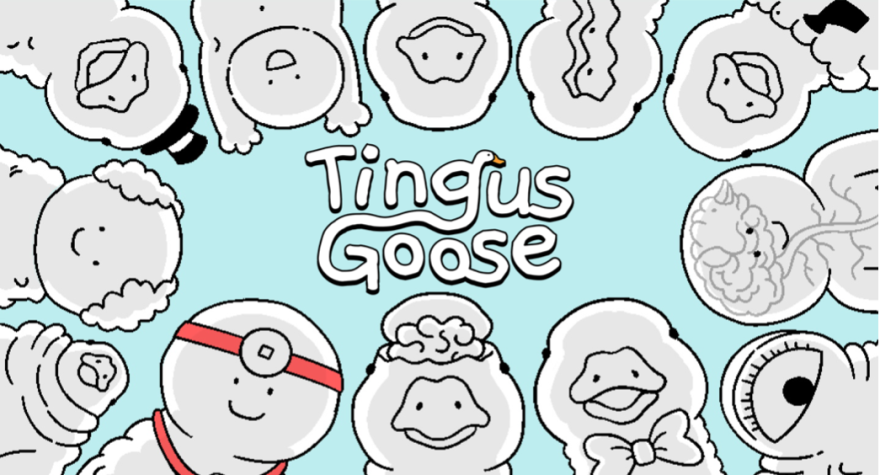
In this guest article, IGEA member UltraPlayers explores how Sydney studio Sweaty Chair’s Tingus Goose generated more than 50% of its first ten days’ sales from Asian markets by combining thoughtful localisation with platform-specific marketing, community building and culturally relevant positioning.
Beyond Translation: How Tingus Goose Generated 50% of Its Sales in Asia
What Tingus Goose taught us about positioning, Chinese platforms, the pathway of game discovery, and long-term community building
In December 2025, Tingus Goose, developed by Sydney-based studio Sweaty Chair, launched on Steam. UltraPlayers, a Melbourne-based publisher, led the game’s publishing across Asian countries.
Within its first ten days, the game sold more than 50,000 copies, with over 50% of sales coming from Asian markets.
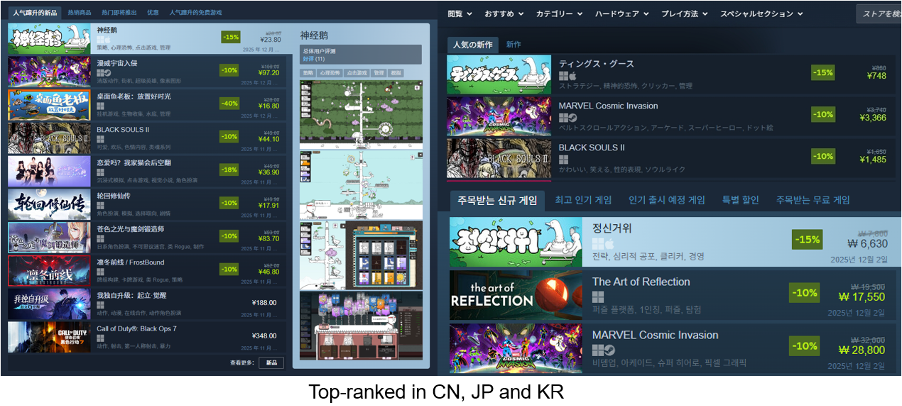
For many developers outside Asia, the region is highly attractive—but difficult to approach with confidence. The challenge is not simply translating a Steam page or localising a trailer. It is understanding how local players discover games, how they talk about them, what makes them care, and how attention becomes trust and purchase intent.
This article focuses primarily on mainland China, where we carried out the deepest localisation, content, and community work for Tingus Goose. The broader sales result came from Asian markets overall, but the case study below shows how we approached the Chinese market specifically.
The key lesson is simple:
Regional publishing is not about placing the same game into a new language. It is about helping that game make sense within a new player culture.
- Localisation Starts With Meaning, Not Translation
When entering a new market, it is easy to treat localisation as a language task.
Translate the in-game text. Translate the store page. Translate the trailers and marketing assets. Then wait for players to understand the product.
But the real question is not whether players can understand the words. It is whether they can immediately understand why this game is worth noticing.
For Tingus Goose, this mattered enormously. The game was distinctive, but not easy to categorise. It had an absurd visual identity, unusual humour, and a gameplay loop that could be difficult to explain in a single screenshot.
After reviewing player comments and early community reactions, we noticed something important: players’ first response was usually not about genre or mechanics.
It was emotional.
They were not asking, “What kind of game is this?”
They were saying things like:
- “This is absurd.”
- “What kind of mental state made this?”
- “Is the developer alright?”
That told us something critical about the market opportunity. Chinese players were reacting first to the game’s emotional and cultural signal—not its mechanical category.
So we did not initially position Tingus Goose as a specific genre. We positioned it as a state of mind.
Before launch: create awareness through contrast
During the pre-launch period, our goal was awareness rather than immediate conversion.
We wanted people to see Tingus Goose, remember it, and feel compelled to talk about it. To do that, we used contrast.
Our early slogan was: We Care About Your Mental Health.
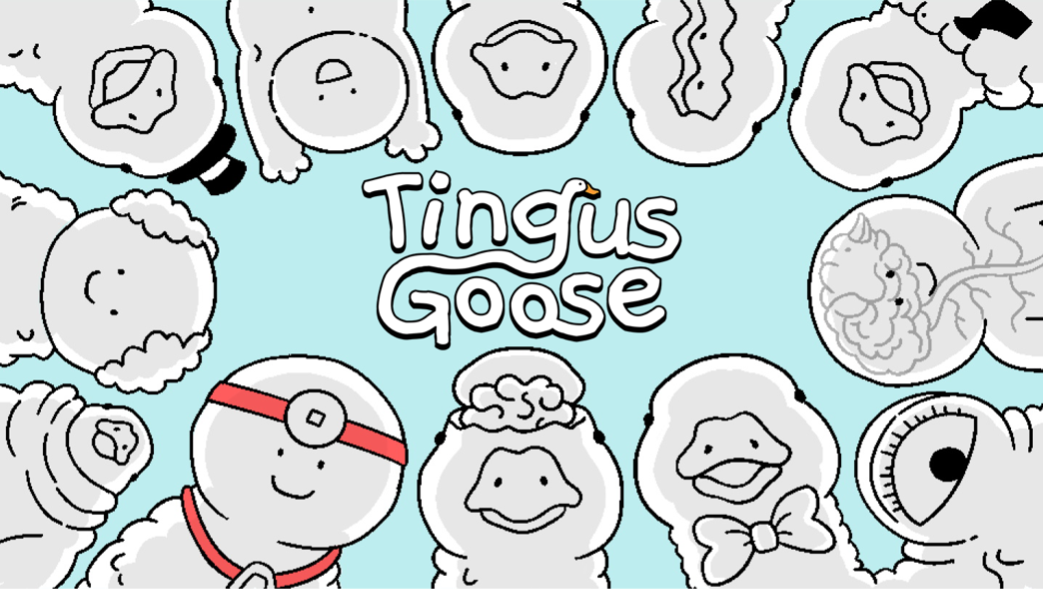
For a game with such deliberately bizarre visuals, the seriousness of that line created an immediate contradiction. Players did not need to understand the gameplay. Seeing the slogan beside the game’s imagery was enough to trigger curiosity and discussion.
The phrase also worked because it reflected a familiar style of Chinese internet humour. When young players encounter something wildly absurd, they often use tongue-in-cheek comments about “mental state” or ask whether the creator is okay.
We were not inventing a new language for the game. We were tapping into one that players were already using.
That gave Tingus Goose an accessible local meaning before players knew its mechanics.
At launch: turn player experience into the reason to buy
As launch approached, the central question changed.
Players already knew the game was strange. They now wanted to know: Is it actually fun?
So we shifted the positioning from surprise to experience.
The new slogan became: Looks absurd. Surprisingly addictive.
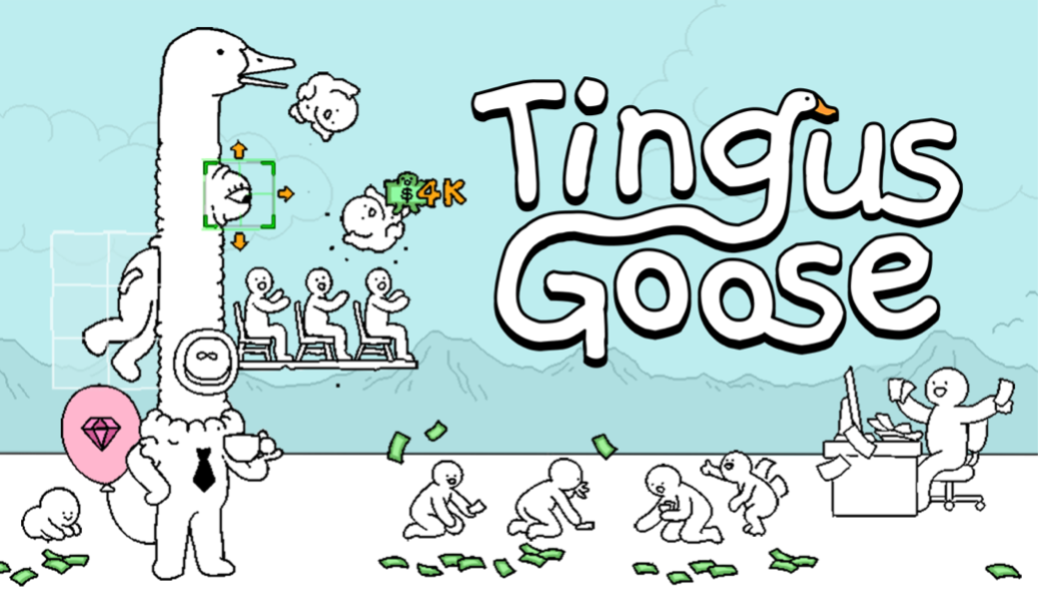
This was more than a copy change. It reflected a change in what the market needed from us.
At this stage, we focused on amplifying real player reactions:
- Streamers reacting live to unexpected gameplay moments
- Themed UGC activities that encouraged players to create and share
- Highlight reels featuring unusual builds, satisfying outcomes, and player reactions
- Short-form content built around the game’s increasingly compulsive feedback loop
These materials communicated the game’s real appeal more effectively than a feature list could:
- Constant feedback and accumulation
- The satisfaction of watching systems compound
- The feeling of “I do not know why, but I cannot stop playing”
We stopped trying to persuade players through claims. We let real player experience become the proof.
This created a clear progression:
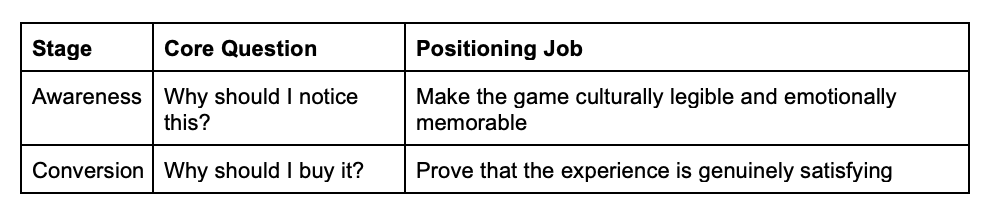
For us, this is one of the most important roles of a publisher: recognising how players currently perceive a game, then adapting the message as awareness develops.
- Design a Clear Conversion Path, Not Just a Channel Plan
Once a game has the right local positioning, the next challenge is helping it reach the right players.
In Western markets, a player might discover a game through Steam, YouTube, press coverage, or a Discord community. In China, discovery is more fragmented. Different platforms play different roles in the journey from first impression to purchase and retention.
For Tingus Goose, we treated platforms as one connected system rather than a list of posting destinations.
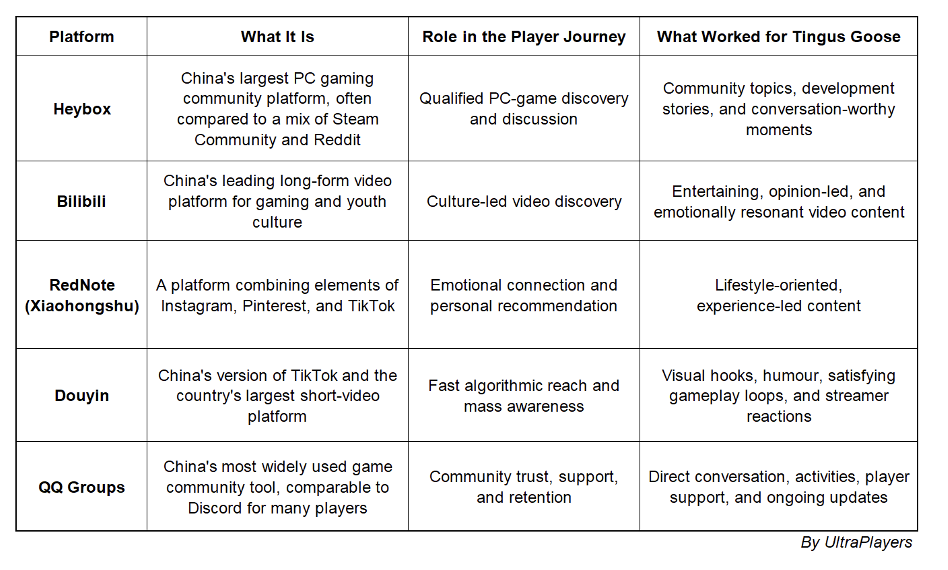
Not every game should use every platform in the same way.
A cosy game, a hardcore simulation, a social co-op game, and an absurd idle game will each need different entry points. The job is not to be everywhere. It is to understand where the game is most likely to be discovered, discussed, trusted, and eventually bought.
For Tingus Goose, the player journey looked like this:
Platform discovery → emotionally resonant content → official QQ community → sustained trust, support, and purchase intent
The right platforms helped players discover the game. The right content gave them a reason to care. The community gave them a reason to stay.
- Create Native Content, Not Identical Posts Everywhere
Different platforms require different storytelling.
Posting the same trailer, feature list, and screenshots everywhere may be efficient, but it rarely gives each audience a reason to engage. For Tingus Goose, we adapted the content angle based on what each platform was designed to do.
Heybox: create topics people want to discuss
Heybox users see a constant flow of game news, discounts, new releases, and developer updates. A standard gameplay introduction can disappear quickly.
So our focus on Heybox was to create topics that could generate discussion.
For example, when Steam declined Tingus Goose’s application to participate in Steam Animal Fest, we reframed it into a deliberately counterintuitive story:
“Geese are not animals: Tingus Goose will not be attending Steam Animal Fest.”

The joke treated the game as something too strange to qualify as an ordinary animal game.
A week before launch, we also created a participation-led post:
“Leave a question about the game and your ID—we will add your name to the official community thank-you list.”
Both posts reached Heybox’s Top 10 trending list and helped the game reach beyond its existing audience before launch.
Bilibili: turn absurdity into content value
Bilibili users are generally more interested in entertaining or meaningful videos than straightforward gameplay explanations.
Rather than explaining every feature of Tingus Goose, we focused on the emotional response it created.
The game’s visuals and tone were already strong enough to provoke immediate reactions, so we developed content around real-life experiences relevant to the target audience, including:
- Appearance anxiety
- Social anxiety
- Workplace pressure
During Lunar New Year, we created a “Spring Festival Survival Guide” themed around the familiar pressure and absurdity of returning home for the holidays.

On the surface, these videos were about everyday life. Underneath, they helped viewers understand the emotional language of Tingus Goose.
This was more shareable than a conventional gameplay breakdown because it connected the game to something players already recognised in themselves.
Algorithms are part of the work
On Bilibili, Douyin, and RedNote, good content alone is not enough.
These platforms are built around recommendation systems. The same video can perform very differently depending on its title, cover image, publishing time, early engagement, completion rate, and even the tone of the comments.
That means publishing requires ongoing testing:
- Which topics generate the strongest click-through rate?
- Which formats keep viewers watching?
- Which emotional hooks encourage sharing?
- Which posts create useful discussion rather than passive views?
It also requires consistent publishing. Each new piece of content is another opportunity to learn what connects with the audience and give the algorithm a clearer signal about who the game is for.
Across the campaign, Tingus Goose achieved:
- Heybox: 107 posts, 610,000+ views, and 25,000+ interactions
- Bilibili: 58 videos and 59 written posts, generating 1.8 million+ views and 130,000 likes
- RedNote: 110 posts, generating 1.7 million+ views and 22,000 likes
- Douyin: 47 videos, generating 1.2 million+ views and 70,000 likes
These results were not created by one viral post. They came from ongoing experimentation, platform-native content, and a clear understanding of what each channel was supposed to contribute to the conversion path.
- Community Operations Turn Attention Into Trust
For many developers, publishing is organised around launch day: prepare the store page, contact creators, release the trailer, then launch.
In China, publishing often starts months before release and continues long after it.
Players are not only evaluating the game. They are also evaluating whether the team behind it cares about them.
That is why we see publishing in China not as a launch event, but as a long-term conversation.
Building a community world, not just a support channel
We established the official Tingus Goose QQ Group in July 2025, ahead of the game’s 2 December launch.
Our first goal was to make the group feel like an extension of the game’s world.
Instead of using standard community-management language, we created:
- A group announcement framed as the Tingus Goose Mental Health Code
- A weekly in-universe “explainer” series featuring bizarre facts about the game’s world
- The Goose Circle Code: First Commandment, which players later shared in other QQ Groups and Steam reviews
This created a sense that joining the community was not simply joining a customer-service channel. It was joining the game’s culture.
Give players reasons to return
Building a group is easy. Giving players reasons to stay is harder.
Before launch, we ran a recurring “Crazy Goose” activity every Tuesday, with low-barrier participation and small prizes.
After launch, we ran themed UGC activities each week. Players submitted artwork, screenshots, jokes, and creative interpretations of the game. We then turned those submissions into highlight compilations for official channels, while participants collected digital badges.
We also posted regular guide videos and discussion content. In some cases, players who had already completed the game saw a new or more unusual way to play and reinstalled it to try again.
Fast support protects player trust
QQ Groups are also important because many Chinese players expect to speak to a real person when they encounter a problem.
They do not necessarily want to submit a form or wait for an email response. They want fast clarification, help, and reassurance.
For indie games, this matters during the launch period. If a problem is not resolved quickly, frustration can move from the community into public Steam reviews. Early review sentiment can directly affect trust and future conversion.
For the first two months after launch, we assigned team members to monitor and support the community in real time.
Over several months, the Tingus Goose QQ Group grew to nearly 3,000 members. Its peak participation rate reached 34%, with day-to-day activity around 17%—well above the engagement levels we typically see in comparable game communities.
One player later wrote a dedicated post praising the game’s community operations. That response confirmed what I mentioned earlier: players notice when a development or publishing team genuinely cares about their experience.
- What This Means for Developers Exploring Asia
The complexity of Asian markets is not primarily about language.
It is about information flow, community culture, player behaviour, and the different ways trust is built.
In China, a player may discover a game through Heybox, form a first impression through Bilibili or Douyin, develop an emotional connection through RedNote, and build trust through an official QQ Group.
Each platform plays a different role. The publisher’s job is to understand and connect those roles into one coherent system.
For Tingus Goose, our work can be summarised in four areas:
- Positioning the game differently at different stages—moving from awareness to conversion based on how local players actually perceived it.
- Selecting the right platforms and content angles—rather than publishing the same material everywhere.
- Designing a clear conversion path—bringing interested players from discovery channels into a long-term official community.
- Building trust through ongoing operations—using community activity, fast support, and player feedback to strengthen the experience after launch.
The goal was not to make Tingus Goose feel like a different game for Chinese players.
It was to help the game become understandable, discussable, and meaningful within a different cultural context.
That, for us, is the essence of publishing.
——————————————————————————————————————————-
UltraPlayers works with distinctive PC games that have the potential to travel across markets and cultures. We help development teams identify where local publishing can create real value—through positioning, content, community, and a player journey built for the market.
We would be glad to start with an honest conversation with developers about where publishing could make a measurable difference.
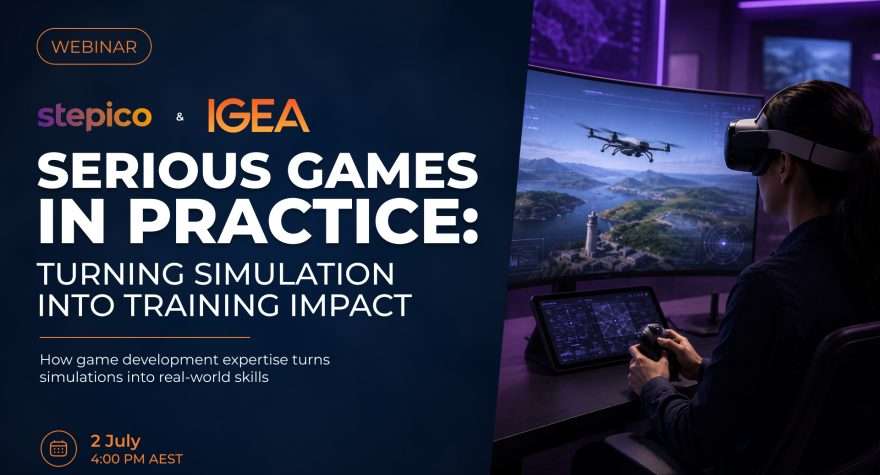
Webinar: Serious Games in Practice: Turning Simulation into Training Impact
Game development expertise is increasingly shaping how organisations train, simulate complex scenarios, and build professional skills. This webinar with IGEA member Stepico explores how gameplay logic, real-time environments, feedback systems, and interactive design can turn simulations into practical, measurable training tools. The session will also explore what opportunities exist for studios looking to diversify into serious games, simulation, and applied interactive experiences.
Drawing on Stepico’s global game development experience, this webinar will connect broader industry trends with practical examples of how game studios can apply their expertise beyond entertainment. We’ll explore where serious games are gaining traction today, why demand for interactive training and simulation is growing, and how game development skills can support professional training across sectors – from education and enterprise learning to defence tech and mission-critical environments.
You can watch the recording here:

The IGEA Educates Summit Returns for 2026
Breaking into the games industry can be difficult. Expectations are not always obvious, missteps happen easily, and from the outside, the industry can sometimes feel like uncharted territory. Which path is right for you?
The IGEA Educates Summit returns on 7 July 2026 with this year’s theme: Stepping Stones.
Hosted on Discord, this FREE event is designed to help students and emerging developers better understand the expectations, pathways, and realities of working in games. Across a full day of talks, industry professionals will share insights into professional behaviour, creative collaboration, career progression, discoverability, and what it takes to build a sustainable career in today’s competitive industry.
Sessions include:
- professional behaviour and workplace expectations;
- the art of creative collaboration and navigating differing perspectives;
- career pathways across AAA, indie, and contract work;
- career trajectories within an established studio;
- insights from Unity’s 2026 Game Development Report;
- the growing importance of playtesting in a discovery-constrained market;
- and how developers can position their games for success in today’s attention economy.
The Summit also offers opportunities to connect directly with developers and fellow future game makers through networking sessions and community discussions throughout the day.
Speakers include developers and industry professionals from studios and organisations, including Gameloft, Riot Games, Sledgehammer Games, Chaos Theory, Unity, Playful, and more.
Register here.
Game Wise Special: What the Federal Budget Means for Game Studios (with RSM Australia)
In this special episode of Game Wise, Jens sits down with Peter Xi, Partner at RSM specialising in R&D Tax and Government Incentives, and Roisin Arkwright, National Tax Technical Director at RSM, to unpack what the latest Federal Budget means for Australian game studios. Together, they explore the proposed changes to the R&D Tax Incentive, including the shift toward “high-intensity” R&D, the removal of supporting activities, and what studios should start doing now to prepare for the changes expected from 2028 onwards.
The discussion also dives into the broader investment landscape, including the proposed capital gains tax reforms and what they could mean for founders, investors, and early-stage studios seeking funding. Along the way, the episode offers practical guidance on documentation, structuring, compliance, runway management, and how studios can make the most of existing incentives and tax concessions.
While the budget presents a mixed picture for the industry, Peter and Roisin stress that there are still significant opportunities for innovative Australian studios — particularly those building original IP and engaging in genuinely experimental work.
You can listen to the episode below:
For an overview of all released episodes, go here: Game Wise – The IGEA Educates Podcast.
If you have any suggestions for future conversations, please let us know! We already have a range of more exciting episodes in our pipeline.
Game Wise: The IGEA Educates Podcast – Niches Win: How Foxie Games Turned Horse Games into 100M+ Downloads
This is another episode in our series highlighting Australian success stories, aimed at inspiring the next generation of game makers. There’s no such thing as overnight success, so how did they do it, and what are their superpowers?
In this episode, Jens sits down with Dineth Abeynayake, Founder and Product Lead at Foxie Games, to unpack the journey behind building one of Australia’s most successful niche game studios.
From an unconventional start as an aerospace engineer, Dineth shares how a self-taught, highly iterative approach – shipping games rapidly and testing them in-market – led to a breakthrough hit and ultimately to more than 100 million downloads across Foxie’s titles.
The conversation dives into the studio’s core “superpowers”: identifying underserved niche audiences, taking those communities seriously, and building games through continuous feedback loops to achieve product–market fit. Dineth also highlights the importance of de-risking projects for investors, balancing creativity with structure as teams scale, and building a strong internal culture that empowers teams while maintaining focus.
You can listen to the episode below:
For an overview of all released episodes, go here: Game Wise – The IGEA Educates Podcast.
If you have any suggestions for future conversations, please let us know! We already have a range of more exciting episodes in our pipeline.
Game Wise: The IGEA Educates Podcast – Unpacking Success: How Quiet Craft Built a Global Hit
This is another episode in our series highlighting Australian success stories, aimed at inspiring the next generation of game makers. There’s no such thing as overnight success, so how did they do it, and what are their superpowers?
In this episode, Jens talks to the team behind Unpacking, one of Australia’s most celebrated indie successes. Wren Brier and Tim Dawson share how a simple real-life moment – moving in together and unpacking boxes – sparked the idea for a game that tells a deeply emotional story without dialogue.
They reflect on their journeys through the Australian games industry, the challenges of going indie, and how years of experience, persistence, and creative instinct came together to shape Unpacking. The conversation explores how the team used everyday objects to convey narrative, balanced player freedom with design intent, and leaned heavily on playtesting and empathy to refine the experience.
You can listen to the episode below:
For an overview of all released episodes, go here: Game Wise – The IGEA Educates Podcast.
If you have any suggestions for future conversations, please let us know! We already have a range of more exciting episodes in our pipeline.
Game Wise: The IGEA Educates Podcast – Cult of the Lamb: The Long Road to an Overnight Success
This episode is the first in a series on Australian success stories. There’s no such thing as overnight success, so how did they do it, and what are their superpowers?
We start this series with the makers of one of Australia’s best-known games: Massive Monster’s Cult of the Lamb.
In the episode, Jens sits down with Creative Director Julian Wilton to explore the long road behind the game, from early indie experiments to building one of Australia’s most recognisable global game hits.
Julian reflects on the studio’s early years in Flash, the hard lessons learned from projects that didn’t land, and how those experiences helped shape Massive Monster’s distinctive creative identity. They also discuss the value of authenticity, accessible design, bold marketing, and why success in games is usually the result of years of persistence rather than an overnight breakthrough.
You can listen to the episode below:
The podcast is also available on all major podcast platforms.
For an overview of all released episodes, go here: Game Wise – The IGEA Educates Podcast.
If you have any suggestions for future conversations, please let us know! We already have a range of more exciting episodes in our pipeline.
Game Wise: The IGEA Educates Podcast: The IGN Gaming Trends Report
Season 2 of our podcast continues with a very special episode: Jens is joined by Peer Schneider, Executive Vice President at IGN Entertainment, to unpack insights from IGN’s Gaming Trends Report.
The conversation explores how games are increasingly functioning as long-term platforms and cultural spaces, rather than one-off releases, and what that shift means for development, marketing, and audience expectations. Jens and Peer discuss the continued rise of “forever games,” the influence of platforms like Fortnite and Roblox, and how discoverability, community engagement, and live support are reshaping success metrics for studios of all sizes.
They also touch on nostalgia, cross-generational audiences, and the growing overlap between games, media, and creator ecosystems, offering useful context for developers thinking about sustainability, IP strategy, and where player attention is heading next.
You can listen to the episode below:
The podcast is also available on all major podcast platforms.
For an overview of all released episodes, go here: Game Wise – The IGEA Educates Podcast.
If you have any suggestions for future conversations, please let us know! We already have a range of more exciting episodes in our pipeline.
Game Wise: The IGEA Educates Podcast – We’re Back for Season 2
Game Wise – the IGEA Educates podcast is back for season 2!
We’re kicking it off with a conversation with Video Game Insights’ Vic Bessey for a data-driven look back at 2025 and what it tells us about where the games industry is heading.
Drawing on VG Insights’ latest datasets and reports, the conversation explores global game sales and spending trends, the growing dominance of Steam, and the mounting challenge of visibility and discoverability in an increasingly crowded market. Vic breaks down why success is no longer guaranteed, even for well-funded projects, and what metrics like wishlists, demos, and platform showcases really mean in practice.
The episode also dives into VG Insights’ Soulslike Report, highlighting the genre’s continued growth and its strong traction across the Asia-Pacific region, as well as the Big Game Engines Report, which shows how Unity and Unreal continue to dominate development pipelines despite ongoing industry debate.
Packed with practical insights for studios, publishers, and policymakers alike, this episode offers a clear-eyed view of 2025 as a year of “shifting sands” – and what developers should take with them into 2026.
You can listen to the episode below:
The podcast is also available on all major podcast platforms.
For an overview of all released episodes, go here: Game Wise – The IGEA Educates Podcast.
If you have any suggestions for future conversations, please let us know! We already have a range of more exciting episodes in our pipeline.

GDC 2026 Scholarship to Assist Marginalised Developers
IGEA, in collaboration with the GDC Scholarship program, is proud to offer a limited number of passes to the GDC Festival of Gaming, March 9 – 13, 2026.
This program aims to help marginalised developers attend GDC, recognising the broader career implications of financial hurdles that disproportionately affect them.
This scholarship is open to applicants from marginalised groups, including but not limited to women (Cis and Trans), Queer people, Aboriginal and Torres Strait Islanders, gender diverse individuals (transgender, non-binary, intersex), disabled and neurodiverse people, and people of colour.
You must be an Australian citizen or resident to apply and be over the age of 18.
This scholarship is limited to 10 passes; it only covers the cost of the passes and not the flights or accommodation costs. Please also make sure that you check any visa requirements in due time!
Here is what previous scholarship recipients had to say:
I can not overstate how fantastic this opportunity was for both myself and my career! I was able to connect with so many talented and passionate people and learn so much from the plethora of talks available. All of this was only made possible by the generosity and support of people and programs such as this scholarship!
I’ve been able to attend GDC thanks to this wonderful opportunity… which has been absolutely a game changer. Meeting game developers from overseas whose work I absolutely admire & deeply respect has been my most cherished moment at GDC. And attending the talks and workshops has been super inspiring, insightful and life-changing in terms of getting my skills up to speed. One of the best parts has been attending GDC with other Aussies whom I hadn’t gotten to meet before. This opportunity from the IGEA has been so helpful, considering how I’ve been trying to push through the previous disadvantages that I’ve experienced, and it really allows me to fully flourish to the best extent of my abilities now that I’m armed with so many helpful connections and a wealth of knowledge from GDC.
Apply Now!
You can apply via this form: IGEA GDC 2026 Scholarship.
Applications will close on 11 January 2026; applicants will be informed of the results by 16 January.
For any questions, please reach out to the IGEA team at info@igea.net
Game Wise – The IGEA Educates Podcast: Episode Six: Australia Plays
We released yet another episode of our Game Wise: IGEA Educates podcast.
Game Wise is the podcast that brings together the best minds in and around the Australian games industry. Hosted by IGEA, this series is about unlocking industry knowledge to help you navigate the business of making games and building sustainable businesses.
We’re wrapping up Season 1 on a high note. Jens is joined by Dr Jeff Brand and our CEO, Ron, to unpack the latest Australia Plays report, now marking 20 years of tracking how the nation plays. Together, they explore what the data reveals about modern Australia: games as an intergenerational pastime, the rise of female players to 51%, and the powerful role games play in connection, wellbeing, and digital literacy.
From cosy games to family bonding to the uniquely Australian flavour of our homegrown titles, the conversation reflects on how games have become a cultural staple, as familiar and universal as sport, music, or film. It’s a lively look at where gaming has been, where it’s heading, and why Australia remains one of the most exciting places in the world to play and make games.
You can listen to the episode via the below:
The podcast is also available on all major podcast platforms. Episodes will be released monthly.
For an overview of all released episodes, go here: Game Wise – The IGEA Educates Podcast.
If you have any suggestions for future conversations, please let us know!
Game Wise – The IGEA Educates Podcast: Episode Five: From Mods to Mainstream: How UGC Is Reshaping Games
We released a new episode of our Game Wise: IGEA Educates podcast.
Game Wise is the podcast that brings together the best minds in and around the Australian games industry. Hosted by IGEA, this series is about unlocking industry knowledge to help you navigate the business of making games and building sustainable businesses.
In this episode, Jens and Andy speak with Scott Reismanis (Mod.io) and Monty Martin (Space Cadet Studios) about the explosive growth of user-generated content (UGC) in games.
They unpack how platforms like Roblox, Fortnite, and mod.io’s tools have turned players into creators, why UGC is now driving engagement, revenue and game longevity, and what this shift means for studios, publishers and developers. From modding communities to full creator economies, this episode explores how UGC has moved from the fringes of game development to one of the industry’s most powerful growth engines.
You can listen to the episode via the below:
The podcast is also available on all major podcast platforms. Episodes will be released monthly.
For an overview of all released episodes, go here: Game Wise – The IGEA Educates Podcast.
If you have any suggestions for future conversations, please let us know!
(Post-production audio done by ‘Dark Half Studios: darkhalfstudios.com).
Game Wise – The IGEA Educates Podcast: Episode Four: What are Publishers and VCs Looking for in Game Studios?
We released a new episode of our Game Wise: IGEA Educates podcast.
Game Wise is the podcast that brings together the best minds in and around the Australian games industry. Hosted by IGEA, this series is about unlocking industry knowledge to help you navigate the business of making games and building sustainable businesses.
In this episode of Game Wise, Jens and Andy sit down with Chris Wright (Fellow Traveller) and Tomas Rossel (Spawn Ventures) to explore what publishers and venture capitalists look for in game developers. Chris shares insights on the publishing side, from why niche focus matters to how early signals like wishlists and social buzz shape decisions. Tomas explains the VC perspective, highlighting the importance of the team, long-term vision, and how investors spread risk across multiple studios.
Whether you’re considering a publisher, seeking venture funding, or just curious about how investors think, this episode offers practical advice to help studios make smarter decisions.
You can listen to the episode via the below:
The podcast is also available on all major podcast platforms. Episodes will be released monthly.
For an overview of all released episodes, go here: Game Wise – The IGEA Educates Podcast.
If you have any suggestions for future conversations, please let us know!
(Post-production audio done by ‘Dark Half Studios: darkhalfstudios.com).
Game Wise – The IGEA Educates Podcast: Episode Three: Australia Vs the World
We released a new episode of our Game Wise: IGEA Educates podcast.
Game Wise is the podcast that brings together the best minds in and around the Australian games industry. Hosted by IGEA, this series is about unlocking industry knowledge to help you navigate the business of making games and building sustainable businesses.
In this episode, hosts Jens and his co-host Andy chat with Manea Castet, Head of Studio at Gameloft Brisbane, and Joe Donoghue, CEO & Co-founder of The Three Thousands, about what makes Australian game development unique. Together they reflect on the country’s vibrant indie scene, world-class creativity, and the “can-do” culture that drives fun, engaging games. They also dive into the challenges of distance from global hubs, attracting and retaining senior talent, and the path from indie beginnings to larger studios.
With generous incentives, strong talent, and a thriving community, Australia is well placed to seize the next wave of opportunities, particularly in mid-sized AA titles. More than just a “remote outpost,” the vision is for Australia to step onto the world stage as a globally significant creative hub for games.
You can listen to the episode via the below:
The podcast is also available on all major podcast platforms. Episodes will be released monthly.
For an overview of all released episodes, go here: Game Wise – The IGEA Educates Podcast.
If you have any suggestions for future conversations, please let us know!
(Post-production audio done by ‘Dark Half Studios: darkhalfstudios.com).
Game Wise – The IGEA Educates Podcast: Episode Two: Key Industry Trends with Newzoo
We released a new episode of our Game Wise: IGEA Educates podcast.
Game Wise is the podcast that brings together the best minds in and around the Australian games industry. Hosted by IGEA, this series is about unlocking industry knowledge to help you navigate the business of making games and building sustainable businesses.
In this episode, Jens and his co-host Andy chat to Emmanuel “Manu” Rosier, Director of Market Intelligence at Newzoo, to unpack the latest trends from Newzoo’s PC and Console Gaming Report.
From the stickiness of legacy titles to the discoverability challenges facing new games, Manu offers a data-rich yet accessible look at what’s shaping player behaviour, market saturation, and platform dynamics in 2025. Hear why older games are dominating playtime, what the rise of co-op and cosy genres says about player preferences, and how developers can navigate increasingly crowded storefronts and shifting business models.
You can listen to the episode via the below:
The podcast is also available on all major podcast platforms. Episodes will be released monthly.
For an overview of all released episodes, go here: Game Wise – The IGEA Educates Podcast.
If you have any suggestions for future conversations, please let us know!
(Post-production audio done by ‘Dark Half Studios: darkhalfstudios.com).
Game Wise – The IGEA Educates Podcast: Episode One
We started our own podcast!
Game Wise: IGEA Educates is the podcast that brings together the best minds in and around the Australian games industry. Hosted by IGEA, this series is about unlocking industry knowledge to help you navigate the business of making games and building sustainable businesses.
Covering all aspects of game development, emerging challenges and industry trends, we tap into IGEA’s extensive network while also bringing in experts from outside the gaming space to give you fresh perspectives and practical advice.
In the first episode, Jens and his co-host, Andy from IGEA member GameGlass, dive into the world of game marketing. They explore the critical role of marketing in the games industry, featuring insights from industry experts Kate Hall (PlayIndies), Michal Napora (32-33), and Jonny Roses (PlaySide Studios).
Discover how to navigate the challenges of marketing for both large studios and indie developers. Learn about the importance of hooks, building a community, and leveraging social media platforms like TikTok and Discord. Our guests share their journeys, from creating content on YouTube and Twitch to founding successful marketing agencies and working with renowned studios.
You can listen to the first episode via the below:
The podcast is also available on all major podcast platforms. Episodes will be released monthly.
If you have any suggestions for future conversations, please let us know!
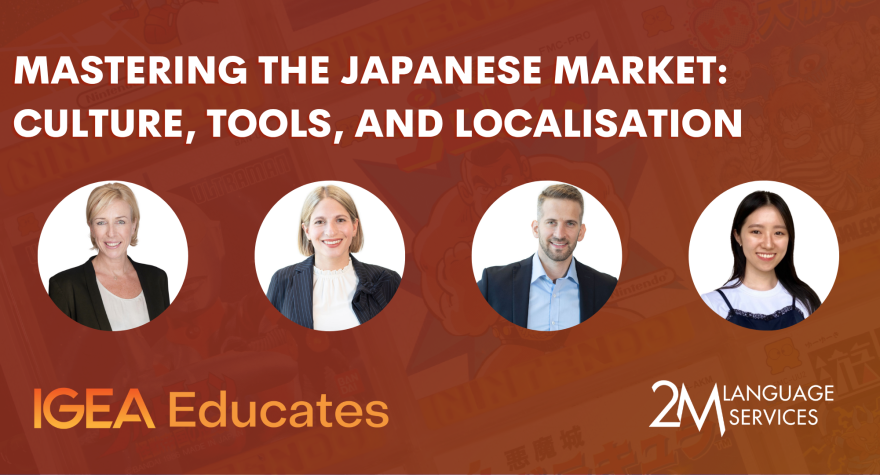
Mastering the Japanese Market: Culture, Tools, and Localisation
The Japanese market is a powerhouse in the global gaming industry. Japan ranks as the third-largest video game market by annual revenue, following only the United States and China. IGEA is excited to explore this market further through our upcoming delegation to BitSummit and the Osaka World Expo.
However, while the opportunities are significant, the Japanese games ecosystem is highly nuanced. Success requires more than just a great game, it also means understanding local expectations, workflows, and business culture.
In this webinar, IGEA member and localisation experts 2M will share practical insights into:
- Key cultural considerations and business etiquette when working with Japanese partners
- Tools and workflows to support Japanese localisation
- Culturally-safe and data-secure Language AI
- Relationship-building and stakeholder management
The session will include a live Q&A, giving you the chance to ask questions directly and get tailored advice from 2M’s localisation and cultural experts.
Whether you’re heading to Japan with IGEA, planning on entering the market or are looking to refine your approach, this webinar will help ensure you’re well prepared for BitSummit, Osaka, and beyond.
You can watch the recording of the webinar below: